

Views: 0 Author: Site Editor Publish Time: 2026-10-23 Origin: Site


Construction fleet managers face a brutal daily reality. You need raw, earth-shattering digging power to stay on schedule. But soaring diesel costs eat your project margins alive. Oversized heavyweights drain your budget. Compact machines just bounce off compacted clay. Where is the exact middle ground?
Recent industry trend analysis reveals a major shift in fleet procurement. Contractors are aggressively moving away from oversized heavy equipment. The new narrative dominating the market is fuel efficiency meets digging force. Businesses want medium-weight champions. They need to boost productivity without inflating overhead. Entering this sweet spot is the 27-ton medium Hydraulic Crawler Excavator. Modern engineering successfully marries high-capacity digging capabilities with optimized fuel consumption driven by smart 150kW engines.
The Perfect Balance: A 27-ton machine offers the ideal middle ground, delivering heavy-duty digging force without the excessive fuel consumption of larger models.
Advanced Fuel Technology: Modern 150kW engines paired with smart hydraulic systems significantly reduce hourly fuel costs while maintaining high torque.
Maximum Productivity: Features like a 1.6m³ bucket capacity and faster cycle times directly translate to more earth moved per shift and higher profitability.
Versatile Applications: This weight class is perfectly suited for a variety of job sites, from urban construction and highway building to quarrying and forestry.
Lower Total Cost of Ownership: Easier maintenance, durable undercarriages, and fuel-saving eco-modes make the 27-ton class a highly lucrative long-term investment.
In the heavy machinery sector, the medium category spans from 20 to 35 tons. Within this range, the 27-ton operating weight has become highly sought after. It occupies a unique operational footprint. You get enough heft for serious excavation while avoiding the logistical nightmares of transporting massive mining equipment.
Finding a machine that lifts heavy trench boxes while navigating tight sites is a common hurdle. A 27-ton unit provides the necessary track footprint and low center of gravity. This ensures exceptional stability during heavy lifting. Yet, it remains surprisingly agile. Operators maneuver around tight urban development plots or single-lane road closures easily. They never compromise on the breakout force required to rip through compacted soil.
Furthermore, this specific weight class shines across a multitude of environments. For large residential developments, it effortlessly handles mass grading and deep utility trenching. In highway construction, it provides precise control for slope shaping. Its robust build makes it highly capable in medium-scale quarry work where loading blasted rock demands relentless stamina.
Fuel is your highest ongoing operating expense. Upgrading to a modern High-Efficiency XE270G Hydraulic Crawler Excavator stops the bleeding. Every drop of diesel translates directly into productive earthmoving through intelligent engineering.
At the heart of these machines lies the 150kW engine. Engineers meticulously tune this powerplant for optimal combustion. Rather than relying on brute force alone, these engines meet strict global emissions standards. They squeeze maximum kinetic energy out of the fuel. The result is a high-torque output at lower RPMs. This drastically reduces fuel burn during heavy loading cycles.
Mechanical power means little without efficient delivery. Today's electronically controlled hydraulic pumps continuously monitor load demands. They adjust fluid flow in milliseconds. When the bucket hits dense rock, the system ramps up pressure. When swinging empty, it dials back. Specifically, features like auto-idle and selectable work modes prevent unnecessary fuel waste during the inevitable downtime between truck loads.
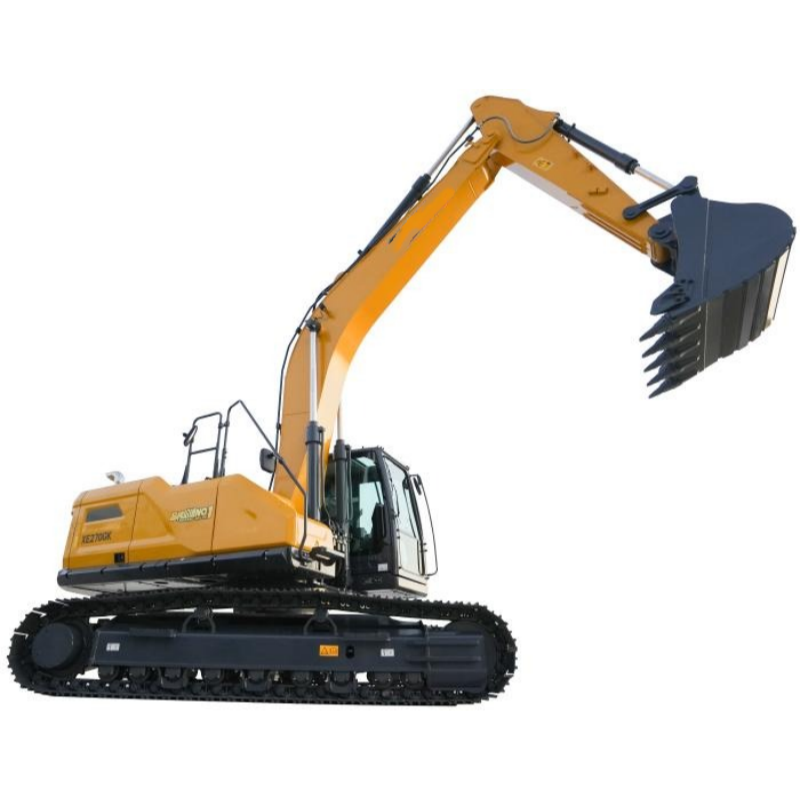
Exceptional fuel efficiency is only valuable if the machine actually performs. When ground conditions deteriorate into frost-hardened clay or densely packed aggregate, raw digging force becomes the defining factor of a successful shift.
Breakout force is the maximum upward force a machine exerts at the bucket cutting edge. A 27-ton excavator leverages its optimized boom and arm geometry to maximize this leverage. Coupled with a voluminous 1.6m³ bucket, operators excavate massive amounts of material in a single pass. This synergy drastically reduces the total number of cycles required to fill a standard dump truck. It directly accelerates project timelines.
Heavy lifting and aggressive digging require an unshakeable foundation. The crawler undercarriage is vital here. Featuring a wide track gauge and a strategically balanced heavy counterweight, this setup provides a rock-solid anchor. Operators confidently utilize the maximum digging force on uneven, muddy, or sloped terrains. The risk of tipping is virtually eliminated.
Ultimately, the fusion of fuel economy and digging power serves one primary goal. That goal is maximizing overall site productivity. A reliable medium Hydraulic Crawler Excavator achieves this by accelerating workflow and keeping the operator performing at their peak.
Time is money on a job site. Advanced fluid regeneration systems within the boom and arm circuits route hydraulic oil directly from one end of the cylinder to the other. This bypasses the main pump entirely. This ingenious design speeds up the machine movements. It results in lightning-fast dig-swing-dump-return cycles. Faster cycles mean more trucks loaded per hour and higher daily yields.
The human element cannot be ignored. A comfortable operator is inherently a more productive operator. Modern cabs act as ergonomic command centers. Low-vibration air-suspension seating and automatic climate control reduce physical fatigue during long shifts. In addition, 360-degree visibility cameras and large glass panels enhance safety. Operators work with greater confidence and speed.
Are you on the fence about which size class best suits your fleet? Comparing the 27-ton model against its smaller and larger siblings clarifies the decision-making process. We have broken down the core metrics below.
Specification / Metric | 20-Ton Class | 27-Ton Class including XE270G | 35-Ton Class |
|---|---|---|---|
Engine Power | Approx. 110kW | 150kW | 200kW+ |
Bucket Capacity | 0.8m³ - 1.0m³ | 1.6m³ | 1.9m³ - 2.2m³ |
Fuel Efficiency | Excellent | Highly Optimized | High Consumption |
Transport Logistics | Standard Trailer | Standard Heavy-Duty Trailer | Oversized Permits Required |
Ideal Application | Urban Utility Work | Mass Grading & Trenching | Heavy Mining & Quarrying |
A 20-ton machine is excellent for general utility work. However, it quickly reveals its limitations when scaled up. If your operators consistently struggle to break through frost layers, the jump to 27 tons is highly justified. In contrast, assuming bigger is always better can severely damage your bottom line. Stepping up to a 35-ton behemoth introduces a significantly higher initial purchase price and exorbitant fuel consumption.
When comparing different brands and models on the market, you need a concrete standard. Stop looking at abstract features. Keep this actionable checklist in mind to ensure you are getting top-tier performance.
Demand a reliable engine in the 150kW range. This specific output provides the exact torque needed without excessive fuel burn. Ensure it meets current emissions regulations applicable to your region. This guarantees you are getting the latest fuel-injection technology.
Verify that the machine comfortably supports a 1.6m³ bucket for standard earthmoving. Having the flexibility to swap to a smaller rock bucket or a larger light-material bucket adds tremendous versatility.
Confirm the actual working weight to calculate precise transport logistics and ground bearing pressure. Check the main pump flow rate to ensure snappy multi-functioning. A high-quality 27-Ton Hydraulic Crawler Excavator like the XE270G checks all these boxes seamlessly.
Evaluating the Total Cost of Ownership is crucial for buyers seeking long-term returns. A machine that constantly requires welding will quickly drain profitability.
Durability starts at the frame. Look for X-frame undercarriages constructed from reinforced high-tensile steel. These withstand extreme torsional stress. Heavy-duty track rollers and wear-resistant steel plating on the boom ensure the machine endures abrasive materials like granite.
Routine maintenance is the lifeblood of heavy machinery. Modern designs logically group fuel filters, engine oil dips, and centralized grease banks together. Mechanics access these safely from ground level. By removing the hassle of climbing over the machine, fleet managers ensure preventative maintenance is actually executed.
Choosing the right equipment is no longer a painful compromise between raw power and operational cost. By investing in a 27-ton medium excavator, contractors secure the absolute best of both worlds. Technologically advanced 150kW engines and highly optimized 1.6m³ buckets allow these machines to tackle the toughest terrains while keeping diesel consumption remarkably low.
Selecting this medium-weight powerhouse directly boosts daily site productivity and slashes fuel overhead. It is time to improve the bottom line of your construction business. We highly recommend evaluating your specific project requirements against these performance metrics. To explore top-tier models like the High-Efficiency XE270G, visit Xuzhou Shangheng to find the perfect machinery tailored to your operational needs and secure your competitive edge today.
Fuel consumption generally ranges from 12 to 18 liters per hour. This varies heavily based on the selected work mode, the operator skill level, and the density of the material being excavated. Smart hydraulic systems help keep this average on the lower end during standard operations.
Yes, a 1.4m³ to 1.6m³ bucket is highly typical for a 27-ton machine. This size provides an optimal balance. It maximizes earthmoving efficiency without exceeding the safe lifting capacity or causing excessive wear on the boom cylinders.
It does require a heavy-duty lowboy trailer and a commercial semi-truck. However, a 27-ton unit generally falls just under the extreme oversized load restrictions that plague larger machines. This makes it relatively easier, faster, and cheaper to mobilize between different job sites.
These versatile machines are the backbone of general construction. They excel in large-scale residential development, road and bridge building, deep utility installation, forestry, and medium-scale quarrying operations.
The 150kW engine provides the essential mechanical horsepower needed to drive high-flow hydraulic pumps. This robust power delivery ensures that the hydraulic cylinders maintain maximum pressure. The result is superior breakout force even when tearing through tough, compacted soils.
With proper track tensioning and routine cleaning, a high-quality heavy-duty undercarriage typically lasts between 4,000 to 6,000 operating hours. Operating primarily on abrasive materials like blasted rock will accelerate wear compared to softer soils.
Select a standard 1.6m³ bucket for general dirt, clay, and loose gravel to maximize cycle speed. Upgrade to a heavy-duty or severe-duty bucket with reinforced wear plates and rock teeth if you frequently excavate shot rock, demolition debris, or highly abrasive materials.


